


Love Eden: Interactive Stories
4.5683.00 Reviews
App Specs
- Version
- 2.5.0
- Updated On
- License
- Free
- Downloads
- 100,000+
- Developer
- Noderno Limited
- Categories
- Simulation
- Platform
- Android
Screenshots

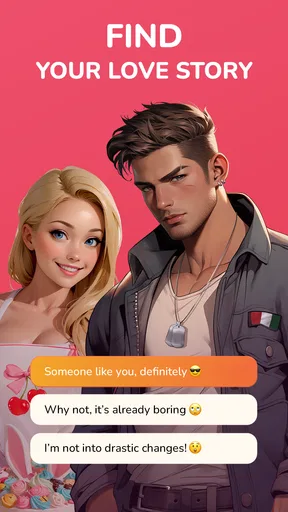
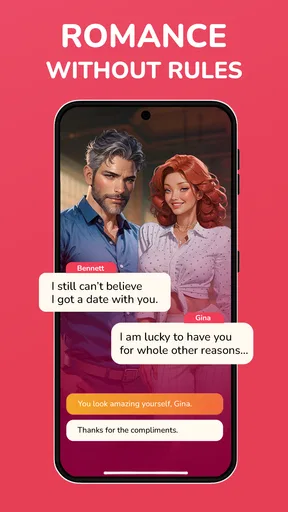

 Analysis by AppCompare
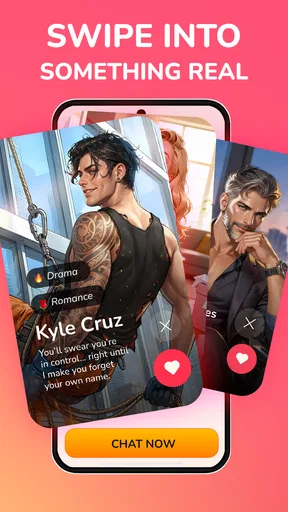
I approached Love Eden: Interactive Stories as a light romance simulation rather than a conventional game with levels, reflex challenges, or a fixed win condition. Its central appeal is the feeling of making personal choices while chatting, flirting, and exploring possible relationships. That makes it a more private, slower-paced experience than many mobile games, and it is best enjoyed when you want conversation and mood instead of constant action.
After spending time with it, my impression is that the game works most naturally as a short, repeatable escape. I can open it when I have a few quiet minutes, follow a romantic exchange, and make a decision without needing to remember a complicated control system. At the same time, the mature rating matters: this is aimed at adults, not younger players looking for a harmless teen romance. Anyone considering it should also understand that the free download is supported by optional purchases, so patience and spending discipline are part of the experience.
What the current version feels like to use
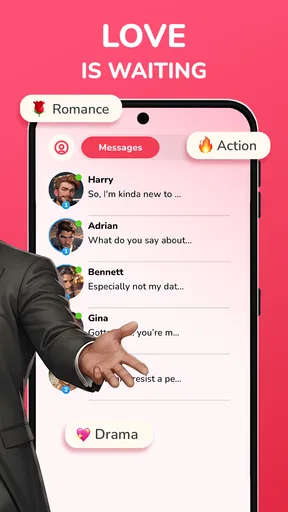
The game comes from Noderno Limited and sits in the simulation category, although its simulation element is centered on emotional choices rather than building, driving, or managing resources. The basic loop is easy to understand: enter a romantic situation, read the exchange, decide how to respond, and see how that choice shapes the tone of the interaction. I found that simplicity helpful because the game does not ask me to learn a large set of rules before I can enjoy its main idea.
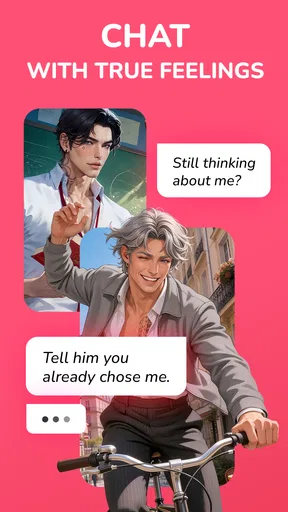
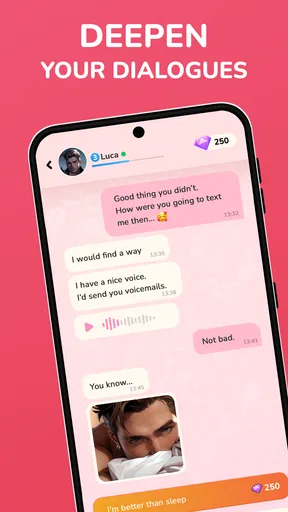
The strongest part is the conversational framing. A choice can feel more personal than selecting an ordinary dialogue option in a traditional visual novel because the focus is on how I want to present myself. I can be warmer, more cautious, more playful, or more direct depending on the moment. That does not turn the experience into a realistic dating simulator, but it does give the short scenes a sense of participation that a purely linear story would lack.
That design also explains who will enjoy it most. If you like interactive romance, character conversations, and stories where your responses create a different emotional atmosphere, the format is approachable. It is particularly suitable for people who prefer compact sessions instead of committing to a long console-style campaign. I can pick it up during a break, make progress, and stop without feeling that I have abandoned a demanding mission.
On the other hand, I would not choose it for someone who wants deep strategy, detailed relationship statistics, or a large simulation system with many practical activities. The attraction is the exchange itself. Players who need complex mechanics may find the experience too narrow, while readers who dislike romantic role-play will have little reason to stay.
How the conversations work in everyday play
A realistic use case is an evening when I want something more engaging than scrolling but less intense than a competitive game. I can begin a scene, read the context, and choose a reply based on whether I want to encourage the connection or keep some distance. The useful habit is to slow down before tapping. Rather than choosing the response that sounds most dramatic, I get more enjoyment when I treat each option as a small statement about the kind of relationship I want to build.
Worth Reading Before You Choose

Flipboard Shows What News Apps Must Do Beyond the Feed

Switching to Android Auto Means Rethinking Your Driving Routine

Google Calendar Makes a Crowded Week Easier to Manage

Ludo King Makes the Most of the Minutes Between Plans

Baby Panda World Brings Quick Play to Modern Phones, but Its Game Library Feels Busy

ESPN’s Live Game View Makes Following Close Games Easier
This is one of the less obvious strengths of the format: it gives me a reason to replay a moment mentally, even when the underlying action is only a tap. I may choose a bold answer during one session and a careful answer later, then compare how the mood feels. That makes the game more personal than a passive romance story, but it also means the quality of the experience depends heavily on whether the writing and available choices feel convincing to me.
My practical advice is to avoid rushing through every exchange simply to unlock the next scene. The pauses between decisions are where the simulation has most of its value. If I read only for the outcome, the game can feel like a sequence of buttons. If I pay attention to the tone of the replies, I get a clearer sense of the character dynamics and a better idea of whether the chosen path suits my preferred style.
Free access, optional spending, and the real trade-off
Love Eden is free to download, which makes it easy to test without committing money at the start. However, in-app purchases range from $0.99 to $129.99 per item. That is a wide gap, and it is the detail I would discuss with a friend before recommending the game. A free entry point is useful, but optional purchases can change how relaxed the experience feels if progress, choices, or extra content become tempting at the wrong moment.
I recommend setting a personal limit before playing, especially if romantic stories make you curious about seeing every possible outcome. Interactive fiction naturally encourages completion because one decision can make the next choice feel important. The smart workflow is to play the free portion calmly, decide whether the writing genuinely holds your attention, and only then consider a small purchase. There is little benefit in paying early just because a scene creates suspense.
This is also where the game differs from a traditional premium visual novel. A paid title usually makes the cost clear at the beginning and lets me focus on the story afterward. Here, the free model lowers the barrier to entry but may require more attention from the player. For people who prefer predictable pricing, a one-time purchase elsewhere may be a better fit. For people who want to sample a romance game before spending anything, the free model is more convenient.
What the version and release history suggest
The current version is 2.5.0, and the game was released on August 27, 2023. Those details place the review in a useful middle ground: this is not a brand-new experiment, but it is also not something I would treat as a finished classic whose design can be assumed to be settled forever. The version number suggests an established product with room for continued refinement, while the release timing means new users are joining a game that has already had time to develop its identity.
For existing players, a later version is generally encouraging because it indicates that the developer has continued working on the product rather than leaving the original release untouched. Still, I would separate that reasonable expectation from a promise about specific improvements. A version number alone does not tell me how much the story has changed, whether older paths have been revised, or whether the most important improvements are visible during ordinary play.
What matters to me in the current build is consistency. A romance game needs its conversations to feel coherent, its choices to make sense in context, and its progression to avoid making me feel that I am tapping through filler. Players returning from an earlier build should pay attention to whether the overall flow feels smoother and whether decisions carry a clearer emotional consequence. New players, meanwhile, can judge the game on its present writing and pacing rather than on expectations about future updates.
The game requires Android 8.0 or later. That is helpful for people using older but still supported Android phones, although compatibility is only the first question. A device may run the game while still offering a less comfortable reading experience if the screen is small or the phone struggles with modern app workloads. Since the main activity is reading and selecting responses, screen comfort matters more here than raw gaming performance.
How it compares with other romance and simulation choices
Compared with a standard dating app, this is a controlled fictional experience. I am not speaking with real people, arranging actual meetings, or dealing with the uncertainty and safety concerns of online dating. That makes it easier to relax and experiment with different responses. It also means the emotional connection is designed rather than spontaneous, so anyone seeking genuine human interaction should use a real social or dating service instead.
Compared with a linear visual novel, the interactive structure gives me more ownership over the tone of a scene. I am not only watching a protagonist make decisions on my behalf. The trade-off is that branching stories can make some choices feel less substantial than they first appear, particularly when several responses eventually lead back toward a similar type of scene. I enjoy the involvement, but I do not mistake it for unlimited narrative freedom.
Compared with management-focused simulation games, Love Eden removes most of the planning and resource juggling that usually define the genre. That is an advantage when I want a gentle, story-led session. It is a disadvantage when I want systems to master. The game is closer to interactive romance fiction with simulation framing than to a detailed life simulator, and that distinction should guide expectations before installation.
Where the experience still has friction
The biggest limitation is that the appeal can become repetitive if I play for long stretches. Conversation-based games depend on anticipation, and that feeling is strongest when I return after a break. A long uninterrupted session can expose the structure: read, choose, react, and continue. I would rather treat it as a series of short visits than expect it to provide the variety of a large role-playing game.
Another potential weakness is emotional distance. The game asks me to participate in romance, but the available choices are still written by the developer. If a response does not match how I would naturally speak, the illusion can weaken quickly. This is unavoidable in a choice-driven story, yet it is especially noticeable in a dating-focused game because the player is meant to feel represented by the selected reply.
The mature 17+ rating is another practical boundary. Adults who want romance with a more grown-up tone may appreciate that positioning, but I would not install it on a shared family device or recommend it to younger players. Parents should also remember that a mature label and optional purchases make supervision worthwhile, particularly when the phone is used by more than one person.
I also think the purchase range deserves ongoing attention from players. The lower-priced items may feel manageable, but the presence of a much higher maximum means I would never hand the phone to a child with unrestricted payment access. For my own use, I would disable casual purchasing or require confirmation every time. That small precaution protects the free-to-try nature of the game from becoming an accidental expense.
Who should try it, and who should skip it
I would recommend it to adults who enjoy interactive stories and want romance without the unpredictability of real-world dating. It is a good match for a reader who likes making personality-based decisions, revisiting scenes with a different attitude, and playing in short sessions. The free download also makes it practical for someone who wants to test the writing before choosing whether the purchase model feels comfortable.
I would suggest skipping it if your main goal is meeting real people, improving social skills through genuine conversation, or playing a simulation with detailed systems. It is also a poor fit if you dislike reading dialogue on a phone, become frustrated by paid options in free games, or expect every choice to create a completely separate storyline. A premium interactive novel may suit you better if you want a clearly defined one-time cost and a more traditional beginning-to-end structure.
One useful way to decide is to ask what you want from the next session. If the answer is “I want to see how this romantic exchange develops,” the game is aligned with that mood. If the answer is “I need challenge, exploration, or a measurable skill to improve,” another category will probably serve you better. That simple distinction prevents the most common disappointment: judging a conversation-led romance game by the standards of an action or management title.
What I would watch as the game continues
For future development, I would pay attention to the depth and variety of the choices rather than only the number of new scenes. The most valuable improvement would be decisions that feel meaningfully different in tone and consequence, not merely alternate wording before the same outcome. Existing users will notice that kind of change immediately because it affects replay value without requiring a completely new format.
I would also watch how well the current version serves both newcomers and returning players. A healthy update path should make the opening understandable while giving established users a reason to revisit their relationships. If new content is added, pacing will matter: too much repetition could weaken the romantic tension, while thoughtful variation could make the short-session structure feel richer.
Finally, I would keep an eye on the balance between free access and purchases. The game is easiest to recommend when a curious player can understand its personality before spending money and when optional purchases feel like a choice rather than a requirement. That balance is especially important here because the emotional hook encourages players to continue. Clear personal limits remain the safest approach, regardless of how appealing a particular storyline becomes.
My overall view is positive but specific. Love Eden is not a broad life simulator or a replacement for real dating; it is a mature, choice-led romance game designed around fictional conversation. The current 4.5 average from around 11 thousand ratings and more than 100 thousand installs show that it has found an audience, while the free entry point makes trying it straightforward. I would recommend it to the right adult reader, with one condition: approach it as a short interactive story, read the choices carefully, and decide early whether its purchase model fits your habits.
For me, its best quality is the small sense of authorship it gives to ordinary romantic scenes. I can choose how direct, playful, or reserved I want to be, then see the conversation respond. Its weakest point is that the same structure can feel limited when played too heavily or judged as a full simulation. If you want a quiet fictional romance on Android 8.0 or later and are comfortable keeping spending under control, it is worth exploring. If you want real connection, deep systems, or a single fixed price, I would look elsewhere.
Pros
- Wide range of romance
- drama
- and fantasy storylines
- Choices can create different relationships and story outcomes
- Episodes are easy to read in short sessions
- Character-focused plots encourage emotional investment
- Regular content updates can keep the reading experience fresh
Cons
- Some premium choices may require in-app currency
- Energy or ticket limits can slow down story progress
- Certain plot twists may feel predictable
- Story quality can vary between different series
- An internet connection may be needed for full access
FAQs for Love Eden: Interactive Stories
What is Love Eden: Interactive Stories?
Love Eden: Interactive Stories is a choice-based narrative game focused on romance, drama, and relationship development. You follow different storylines, meet potential love interests, and make decisions through dialogue and interactive scenes. Your choices can influence character reactions, romantic progress, and the direction of the plot, making the experience feel more personal than a traditional linear visual novel.
Is Love Eden: Interactive Stories free to download and play?
The app can generally be downloaded for free, but some content may require in-app purchases. Premium choices, special outfits, bonus scenes, or faster progress can be offered through paid currency or optional packages. You can usually continue playing without spending money, although free players may need to wait for energy, tickets, or other resources before accessing additional chapters.
Do my choices really affect the stories and relationships?
Yes, your decisions are an important part of the gameplay. Selecting different dialogue options may change how characters perceive your protagonist, unlock alternative conversations, or influence romantic and dramatic events. However, not every choice creates a completely different storyline. Some major plot points remain fixed, while selected decisions mainly affect scenes, relationship levels, and short-term outcomes.
Does Love Eden: Interactive Stories require an internet connection?
An internet connection is normally recommended, and some features may require you to be online. The game may need access to its servers to load chapters, save progress, display advertisements, process purchases, or synchronize your account. Because of this, offline play can be limited or unavailable, particularly when opening new stories or accessing content that has not already been downloaded.
Is Love Eden: Interactive Stories suitable for all ages?
The game is primarily aimed at older teenagers and adults because its stories can include romance, emotional conflict, relationship themes, and mature situations. The exact rating and content may vary between storylines, so parents should check the store listing and in-app descriptions before allowing younger players to install it. Users should also review the privacy and purchase settings before playing.


